

Pope Leo Changes Tune On Immigration?
Pope Leo tells people of Cameroon not to migrate. They need to stay in their country and Make Their Country Great!
A nation doesn’t need a church to have a religion. Sometimes it forms quietly—
in rituals, symbols, and shared beliefs…long before anyone names it.
Most people think they know where religion lives.
But sometimes it shows up in places no one stops to question—until you step back and take a closer look.
The Journey Begins…
Most people think they know where to find it. They picture it in certain places—church buildings, Sunday mornings, Scripture readings, maybe a quiet prayer before a meal. Something contained. Something recognizable. Something they can step into…or step away from.
But what if it doesn’t always stay there? What if it moves?
Years ago, a man named Robert Bellah noticed something that, once seen, is hard to unsee. He suggested that a nation can have a kind of religion—not a church, not a denomination—but something that functions in much the same way. A shared set of beliefs. Rituals people participate in. Symbols that carry meaning, and Language that sounds less like opinion…and more like conviction.
Once you start looking for it, you begin to notice it. Not in the obvious places, but out in the open.

Not the policies—those come and go. Listen instead to the tone.
You’ll hear people talk about “the soul of the nation,” as if a country were something living and moral. You’ll hear phrases like “this is a sacred moment,” or “we are on the right side of history.” There are gatherings that feel less like rallies…and more like revivals. People stand, hands over their hearts, voices rising together—not just in agreement, but in something closer to belief.
But it doesn’t behave like something neutral. There are rituals. Days set apart. Moments of silence. Pledges spoken in unison. Songs that everyone somehow knows.
There are symbols. Flags that carry more than cloth. Monuments that are treated almost like sacred ground. And, there are Stories—founding stories—that aren’t just remembered, but honored.
There’s a moral framework. A sense of good and evil. Of fall and redemption. Of where things went wrong…and how they might be made right again.
But it forms people just the same. And that’s where things begin to matter. Because once something starts to function like religion…it begins to ask for what religion asks.
Loyalty. Identity. Belief. And, Not always loudly, Not always intentionally, But steadily. You can see the tension in ordinary conversations.
Someone says, “I’m not religious,” and they mean it. But listen a little longer, and you’ll hear deep conviction about justice, purpose, meaning—about where things are headed and what must be done.
Another person insists that faith should stay private. But speaks about political ideas as if they carry ultimate weight—something beyond debate.
It’s not hypocrisy. It’s something else. It’s something quieter. At some point, without much announcement, the language of faith didn’t disappear.
It shifted.
“Truth doesn’t shout… but it doesn’t hide either.”
Both Barrels
What once lived primarily at the altar…began showing up on the platform.What was once clearly named…became something assumed. And most people didn’t notice the move.
The difficulty now is not that people believe too much. It’s that many don’t see what they’re believing in. And when something goes unrecognized, it also goes unexamined. It shapes thought without being questioned.
It sets direction without being named.
So the first step isn’t to argue about it. It’s simply to see it. It’s to step back, just a little, and ask: What actually forms the way I think? What do I treat as ultimate priority? What do I trust…without ever really noticing that I do?
Because truth doesn’t struggle when it’s seen clearly. But it does get lost in confusion. not because it’s weak, but because confusion makes everything feel equal. And sometimes the hardest thing isn’t choosing between two ideas.
It’s recognizing that you’ve been standing inside something all along. That’s where clarity begins. It’s Not in winning an argument, but in seeing what’s already there.
There’s more going on here than just politics or culture. Over time, as older structures weakened and new ones took their place, something filled the space.
Not all at once. Not in a way anyone voted on. But slowly enough that most people never stopped to ask what had changed.
They just learned to live inside it.
In the next post, we’ll step into something deeper:
The curtain was torn—but what actually changed?
Because many assume that moment removed something…when it may have fulfilled it.
"Never Go Full Tribal"
Both Barrels
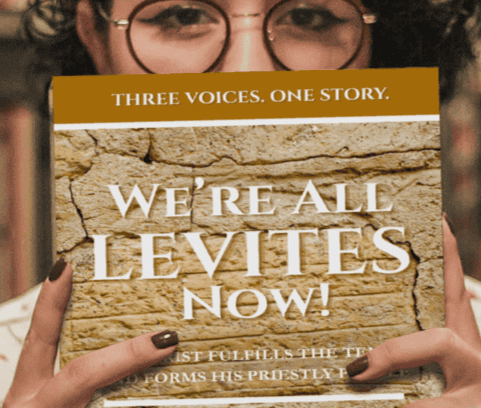
If something has taken the shape of religion…what was it that originally held that place?
This is where that question leads.
This first volume explores covenant, priesthood, and structure—not as abstract ideas, but as something that shaped everything that came after.

Pope Leo tells people of Cameroon not to migrate. They need to stay in their country and Make Their Country Great!
“America’s “generic God” is gone. A new civil religion has emerged—more defined, more visible, and shaping public life.”
David Axelrod, chief strategist behind Obama’s presidential campaigns and key player at Obama White House, was spotted at the Vatican
There is a familiar pattern.
Jesus saves. I pray a prayer, and my sins are forgiven.
That’s all there is… a done deal. Just me and Jesus.
But what if there’s more?
What if it’s bigger… and deeper… than I imagined?

both barrels: to hunt for the truth with all we’ve got… then shout it loudly


Let. My. People. Go.
You're about to use our sticky note tool to submit website requests to our team. Click the "Accept" button to download a cookie that will authorize you to see and use the tool on this device.
To leave a Sticky note, click the comment button and then click anywhere on the page.
We couldn't activate the sticky note tool. Please reload the page and try again — if it keeps happening, let your site contact know.
